Michael Green

Journalist, producer and oral historian

  • Writing
  • Audio
  • Oral history
  • Projects
  • Book

The last drop of water in Broken Hill

In Environment on June 30, 2015

As the drill is plugging downward at a thousand feet of level,
If the Lord won’t send us water, oh, we’ll get it from the devil
.
—Banjo Paterson, “Song of the Artesian Water” (1896)

“YOU’RE under five metres of water right now,” Barry Philp says. “Hard to imagine, isn’t it?” I look through the windshield of his four-wheel-drive. The sky is blue and empty and the land is dead flat to the horizon.

We’re rattling along a grey clay track on the bottom of Lake Menindee, several kilometres from its shore. Three years ago the lake was full. Together with surrounding lakes, it held five times the water in Sydney Harbour. Beginning in 2010, two summers of severe rains had followed a prolonged, notorious drought in eastern Australia – “the millennium drought”. The land was flooded.

But yet again, so soon, the inland is wretched for lack of water. Rainfall in the past three years is tracking lower than the worst on record. Today, the lakebed is bone dry. In this improbable place, we are driving in search of water.
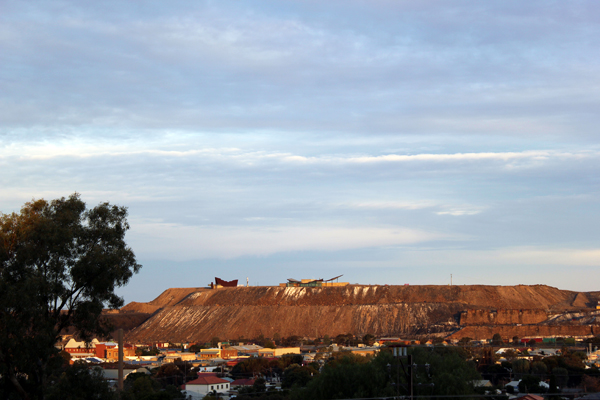
The "line of lode" overlooking Broken Hill

The “line of lode” overlooking Broken Hill

It is late April 2015. Four months ago, officials estimated that Broken Hill, population 18,000, would run out of water in August. They began a drilling program to find emergency supplies from underground.

A blue rig rises above the plain, surrounded by white trucks and men clad in orange and blue. Philp pulls up next to it. He grew up in Menindee, the hamlet nearby, and now manages the enormous Menindee Lakes storage infrastructure with his small team of seven. The system was built in the 1950s to secure a water supply for Broken Hill, 70 miles north-west. For the second time this century, it’s on the brink of failure.

We watch as water gushes from the bore, muddy at first, then clearer. Nick, a geo-hydrologist from Canada, takes samples. To complete the test, they’ll pump water from the well – about 55 yards underground – non-stop for two days, while assessing the results from three surrounding monitoring wells. What is the flow rate and quality? Is the water table dipping? Is water migrating through the aquifer?

But while the drillers are working seven days a week, the residents of Broken Hill are agitating just as hard for them to stop. A campaigning group called WE WANT ACTION has sprung up – its logo is a fish skeleton encased with the slogans: “Refuse to Lose” and “United We Stand”.

Mark Hutton, a long-ago retrenched miner, who now works on the hospital’s reception desk, founded its predecessor, the Darling River Action Group, during the millennium drought. He’s among the leaders of its vigorous online incarnation, which uses Facebook to publicise and scrutinise water supply issues and foment opposition to the bores. In these parts, resistance is a way of life. “We’ve been fighting the New South Wales government for 200 years,” he says.

Chemists define it as H2O, but in Broken Hill, water demands a more complex formula. Add salt and scarcity, erosion and evaporation, ill-considered dams and irrational irrigation, intractable politics, sacred sites, speedboats and roses. Stir up dissatisfaction and stand well back, because, within days, the state government will announce its emergency water strategy for the town.

Before I arrived, a policy worker had told me, exasperated: “Everyone comes new to water and thinks it just falls from the sky. It doesn’t. The Menindee Lakes system is one of the most complex water systems in one of the most variable climates in the world.”

And this, too: “You’ll hear all sorts of crazy talk in Broken Hill.”

Read the full article in Nautilus Magazine
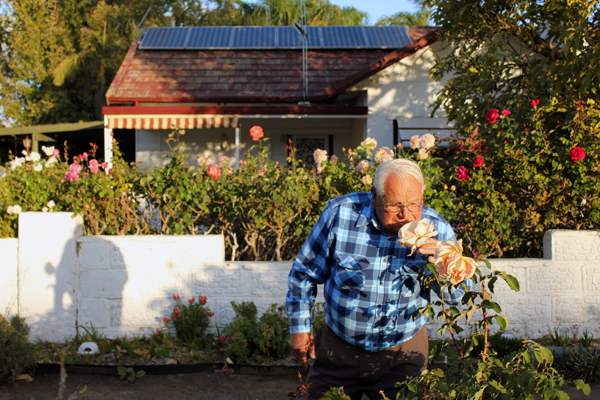
Bob Pascoe has 64 rose bushes in his front yard in South Broken Hill
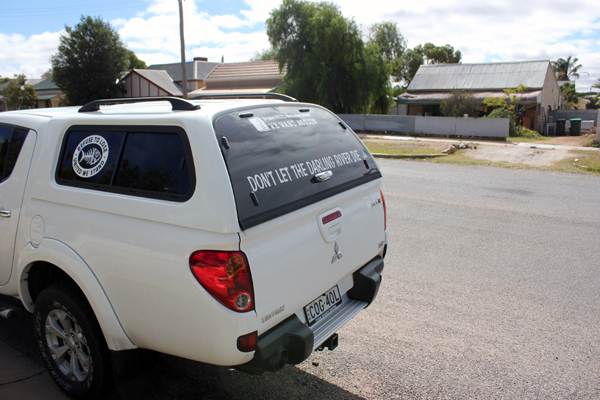
A car with stickers saying "Don't Let the Darling River Die"

Locals protest against water policy decisions by way of the “WE WANT ACTION” page on Facebook.
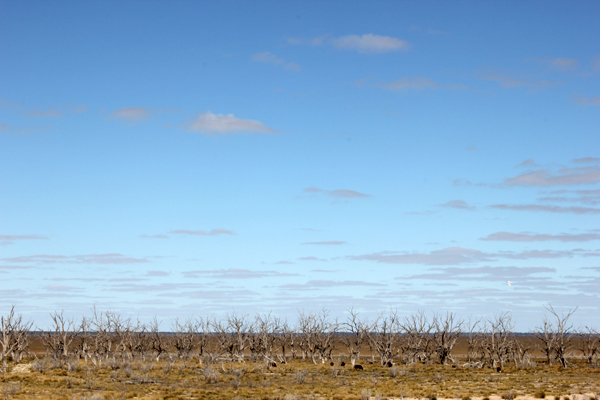
Lake Menindee is dry

Lake Menindee. The white marks on the tree trunks show where the water level once reached
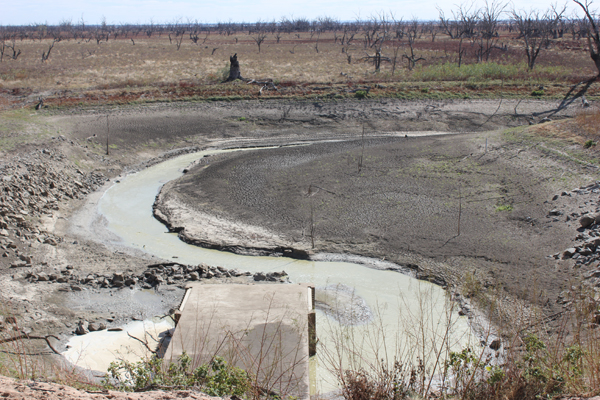
What’s left of Lake Pamamaroo.
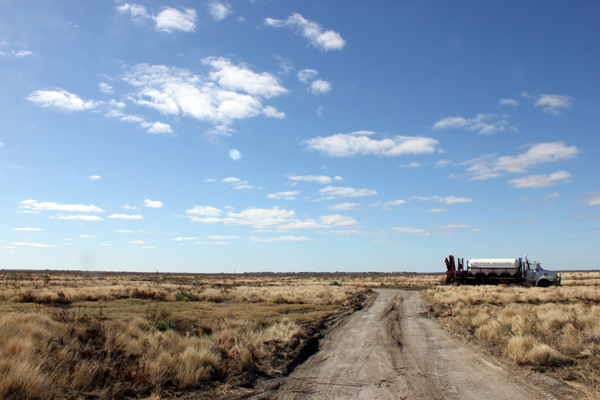
The bore drilling team is working on the enormous dry bed of Lake Menindee.
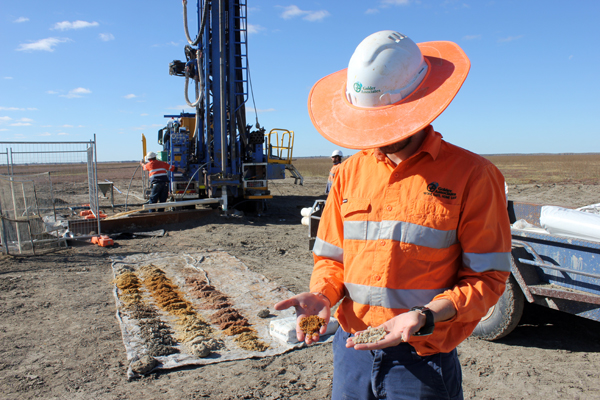
A geo-hydrologist inspects earth samples from the test bore on Lake Menindee, while water begins to be pumped from the well.
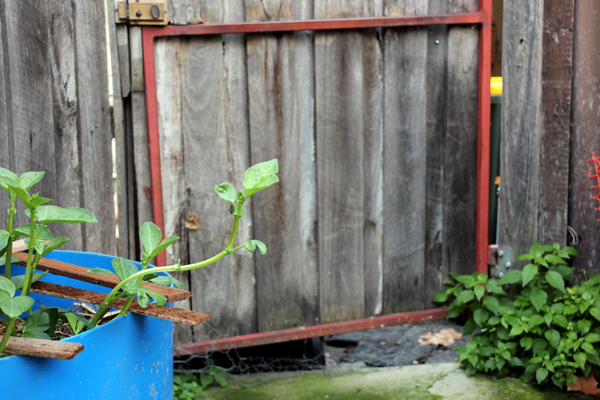
Unhappy feet

In Blog on June 20, 2015

I work from an idyllic lean-to in my backyard, where I look out at the grand, spreading Jacaranda that grows two doors down. My desk also affords a narrow L-shaped view onto the cobblestone alley: the slice visible underneath the back gate, as well as a sliver on the lower part of one side, where the hinges are set. This morning, as I worked, I watched the legs of someone who was shooting up.

My back gate

My back gate

My house is a terrace with a frontage on a small street and a rear courtyard accessible from a main road by the alley. When houses were first built here, there were no cars or sewer system. Nightsoilmen carried buckets of shit to their horse-drawn carts by way of the back entrance. Now, I use it to slip out quickly when we’re short of milk.

Just on the other side of the gate is a nook that can’t be seen from the road. One morning recently I heard a shuffle, looked up, and saw feet. Then I saw an arc of urine splash the stones. Today I saw tattered runners and dark, baggy trackpants with a thick silver stripe down the side. A jacket sleeve trailed the ground; I imagined it jammed sloppily into the waistband.

The feet were anxious, weight shifting from one to the other. I watched, pulse racing, wondering if their owner would piss or jump on a bin and try to vault the gate.

But the man kept shuffling. I could hear him fiddling, anxious, using the bin lid as a bench. After several minutes, the legs went slack. He leaned back against the fence, his body released, his feet still. He stayed there a long while, so close and so far, and I kept working.

Totally Renewable Yackandandah

In Community development, Environment, The Age on June 10, 2015

WHEN Frank Burfitt was planning the new Men’s Shed at Yackandandah, he struck a problem – its electricity supply. It required a costly new connection from the road, traversing the hospital grounds.

So they did something that would have been unthinkable only a few years ago: bypass the network altogether. “We did it cheaper than connecting to the grid,” Burfitt, a retired electrical engineer, explains.

“We got the first juice about a month ago and we’ve been using the power to fit out the shed. We’re proud we could do something visionary.”

The solar panel and battery system at the Men’s Shed is connected with a bigger initiative: Totally Renewable Yackandandah. A group of residents want the north-eastern Victorian town to produce more electricity than it uses, by 2022.

They began working on their scheme twelve months ago, and already the number of solar households in the town has jumped. Now, one in every three houses has solar power, more than double the national average.

Matthew Charles-Jones, from Totally Renewable Yackandandah, says they’re surveying local residents and working on their grand plan, with the help of a council grant. In the meantime, new solar panels, like those on the brand new Men’s Shed will make it easier to reach the target.

Yackandandah is one of three Australian towns plotting to become 100 per cent renewable, along with Newstead, in central Victoria and Uralla in northern NSW. Newstead was recently awarded a $200,000 grant from the state government to develop its plan.

Nicky Ison, director of Community Power Agency, says the technology is the easy part. For larger-scale renewable energy schemes, however, funding remains a challenge. That means starting small and growing.

“These towns first need to do widespread energy efficiency campaigns, and look at household, business and community solar,” she says.

In Yackandandah, the community centre has set the example. Its old brick-veneer house has been transformed, with the help of a state government grant. Local tradies installed a large solar photovoltaic system, insulation, double-glazing, shading and efficient air conditioners for heating and cooling. Electricity bills have plunged by three-quarters.

“We’ve had some really cold days this week,” says Ali Pockley, the centre’s manager. “But you come in here and it’s just toasty. It was hopelessly inefficient up until the retrofit, no doubt about that.”

Ison says that while the idea of “energy self-sufficient towns” is unfamiliar in Australia, it is well established overseas. Last year, she organised a visit by Arno Zengle, the mayor of a village in Bavaria called Wildpoldsried, which produces more than four times the electricity it consumes.

Matthew Charles-Jones heard Zengle speak and was inspired by his message, because Yackandandah is about the same size as Wildpoldsried.

Although going fully renewable is an ambitious goal, the town has form: a decade ago, residents bought out the local petrol station, which was closing down. Now it’s a thriving community-owned business, encompassing hardware and farm supplies, with an annual $3 million turnover. It hands out $20,000 in local grants each year.

It also boasts a large solar photovoltaic array, funded in part by the local folk festival.

Charles-Jones says Totally Renewable Yackandandah is propelled by concern over climate change, but also – as with the petrol station – by a desire to strengthen the local economy.

“We’re not inventing anything new,” he says. “We’re just being smart about the way we’re doing energy.”

Read an edited version of this article at The Age online

  • « Previous Page
  • 1
  • …
  • 3
  • 4
  • 5

© Copyright 2017 Michael Green · All Rights Reserved